
Illawarra Medical Centre, Ballajura, WA
50kW Rooftop On-Grid Solar PV System
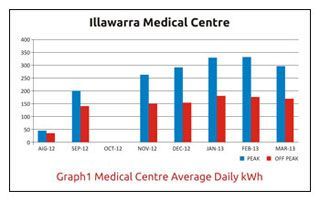
An energy reduction review conducted by Regen Power revealed that the average consumption of electricity is about 450 kWh/day for the medical centre building and 180 kWh/day for the pathology building. The medical centre had a peak electricity tariff of 39c/kWh (ex GST) while the pathology building had a tariff of 31c/kWh (ex GST).
TheDirectorofthemedicalcentre,DrAlanLeeb,wantedtooffsetasmuchoftheMedicalCentre’selectricitycostsaspossiblewhilemakingapositivecontributiontotheenvironmentbygeneratinggreenelectricity.
Find Your Way
An energy reduction review conducted by Regen Power revealed that the average consumption of electricity is about 450 kWh/day for the medical centre building and 180 kWh/day for the pathology building. The medical centre had a peak electricity tariff of 39c/kWh (ex GST) while the pathology building had a tariff of 31c/kWh (ex GST).
Energy Assessment
The Director of the medical centre, Dr Alan Leeb, wanted to offset as much of the Medical Centre’s electricity costs as possible while making a positive contribution to the environment by generating green electricity.
Regen Power designed a 50 kW solar power system to meet the day time electricity demand which is mostly lighting, refrigeration and air-conditioning. The system is the largest such roof top solar installation for a medical centre in Western Australia.
System Architecture
The engineers at Regen Power collected average radiation, air temperature and other climate data throughout the year prevalent in that particular area to determine the appropriate system design for the required 50kW solar power.
Pathology Building
Perth’s annual peak electricity demand occurs in summer during prolonged heat waves as experienced on 11 Jan 2014 when, according to the Bureau of Meteorology (BoM), the temperature reached 44 degrees Celsius in parts of Perth. As can be seen from the data obtained, a major portion of the electricity consumption of the medical centre during the day was met by solar power. In addition, solar electricity produced between 2:00pm-5:00pm assists in bringing down the peak demand of the entire Western Power electricity grid.
Carbon Reduction
The solar power installation is expected to meet about 35% of the annual electricity consumption of the medical centre. This is equal to about a carbon footprint saving of 64 tonnes of CO2per annum –equivalent to eliminating the carbon footprint of 12xaverage Western Australian household’s annual electricity consumption.
Project Showcase
Installation & Site Documentation
Technical Specifications & Performance
Medical Centre System Specifications (40kW)
| Metric / Specification | Value / Detail |
|---|---|
| System Size | 40kW |
| No. of PV Modules | 160 x 250W Hanwha SolarOne Polycrstalline Modules |
| No. of Inverters | 2 x 15kW SMA Tri-power 15,000TL + 1 x 10kW SMA Tri-power 10,000TL Inverters |
| Annual Energy Yield | 70,000 kWh per annum |
| Estimated CO2 Savings | 58 Metric Tonnes per annum |
Pathology Building System Specifications (10kW)
| Metric / Specification | Value / Detail |
|---|---|
| System Size | 10kW |
| No. of PV Modules | 40 x 250W Hanwha SolarOne Polycrstalline Modules |
| No. of Inverters | 1 x 10kW SMA Tri-power 10,000TL Inverter |
| Annual Energy Yield | 17,500 kWh per annum |
| Estimated CO2 Savings | 14 Metric Tonnes per annum |