
Discovery & Load Analysis
Site location, access, climate band, intended loads, expected growth, generator history. We size by worst-week-of-winter, not by annual average.
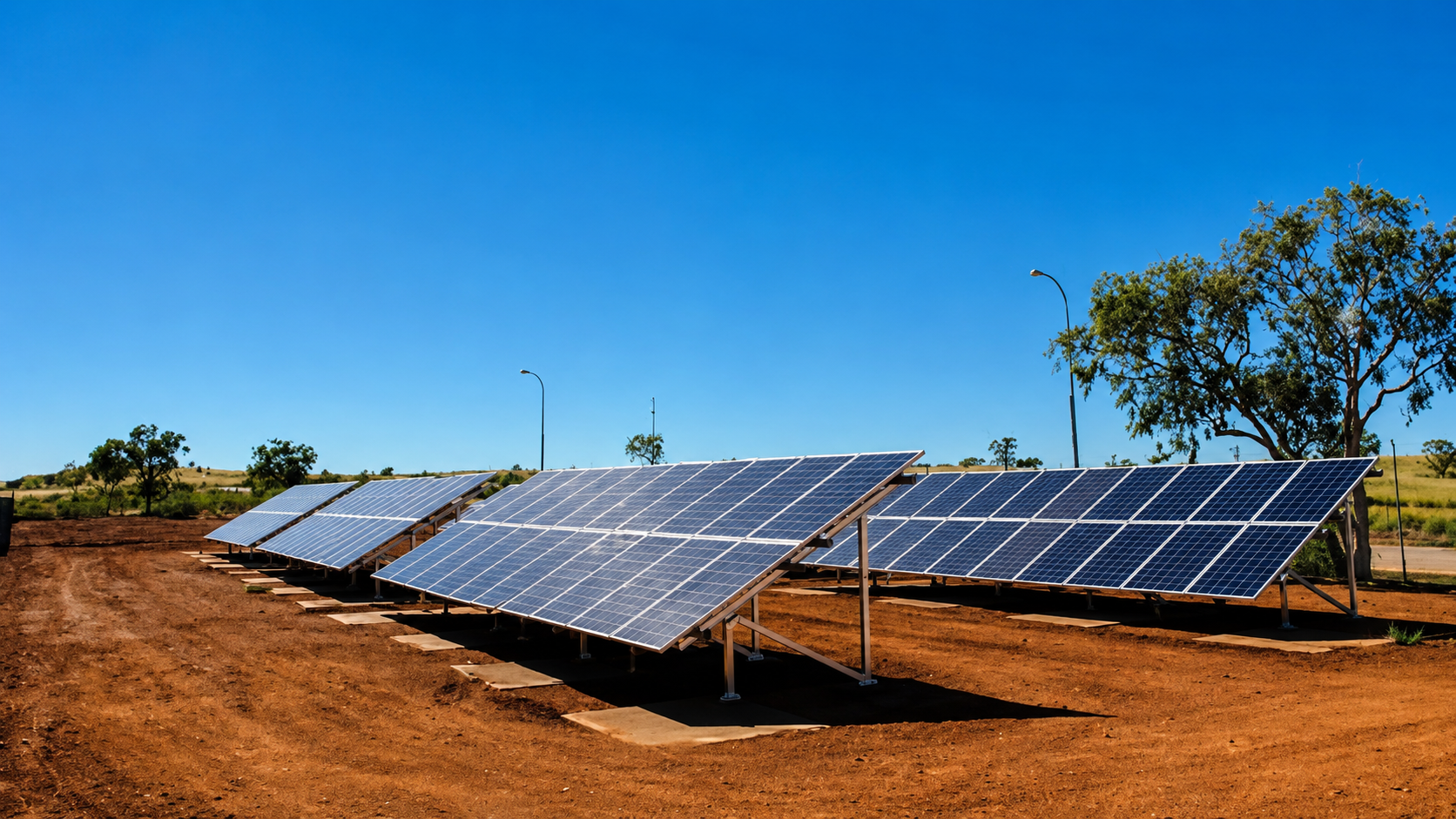
Off-Grid Power, Engineered For
When The Grid Stops
In Western Australia, many areas lie beyond reliable grid access. Connecting can cost $30k–$200k per km, while running diesel generators is expensive and inefficient. Standard solar alone often isn’t enough for harsh conditions—making well-designed off-grid renewable systems a smarter, more reliable solution.

Grid Extension
Western Power's quoted cost to extend a line to a remote property. Often more expensive than a complete off-grid system.
Standard Diesel Cost
Typical 24/7 fuel + service cost for a remote site running on diesel alone — and the engine wears out faster running at part load.
Renewable Share Possible
Properly designed solar-wind-diesel hybrids consistently deliver 90%+ of energy from renewables, with diesel as backup only.
Four Segments.
Off-grid systems are sized to the customer. A weekender shed needs different engineering to a mining camp. Pick the segment that fits your site to see how we scope and design.
Off-grid family homes, weekenders, lifestyle properties beyond the SWIS, granny flats, sheds and live-in studios
10–20kW solar + 30–60kWh storage + 5–10kVA backup generator. Stand-alone solar+battery

Sheep, cattle, cropping, dairy, marron, vineyard. Bore pumps, packing sheds, freezers, electric fences, EV charging.
30–100kW solar + 60–200kWh storage + diesel/gas hybrid generator. HybridGEN-pack or full microgrid
Exploration camps, communications towers, tourist lodges, remote workshops. Often three-phase, often modular.
Containerised microgrid 15–150kW. Solar-wind-diesel hybrid. Multi-source generation, multi-day battery autonomy.
Villages, schools, medical centres, water plants, irrigation, sewage. Often paired with our AcquaSmart water-treatment system.
Custom microgrid + AcquaSmart water solution where applicable. International experience across India, Indonesia, Maldives, Vietnam, Sri Lanka.
Three Engineered Solutions
Across every off-grid project, our design principle is the same: maximum renewable share, minimum lifetime cost, real reliability. Three product platforms make that possible — pick the one that fits the segment, and we engineer to your site.
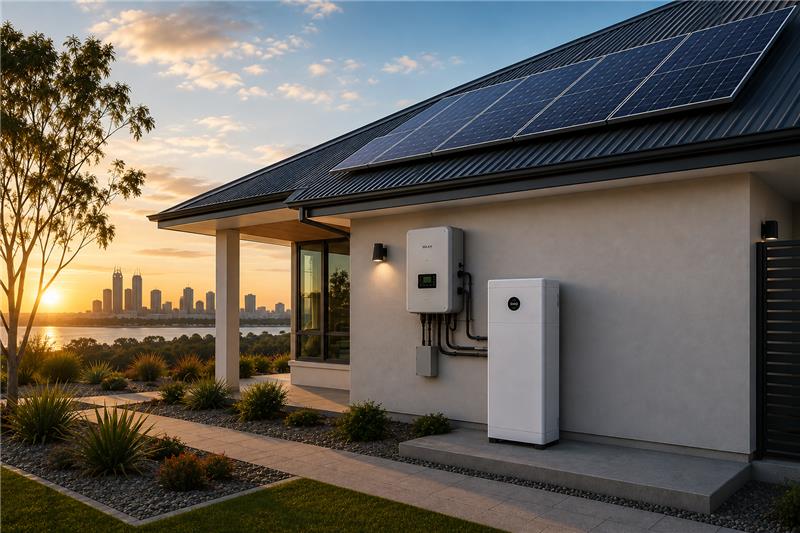
Solar PV + lithium battery + small backup generator. The straightforward off-grid solution for homes and small commercial sites.
Best for:
Remote homes, lifestyle blocks, holiday properties, small workshops, weekenders
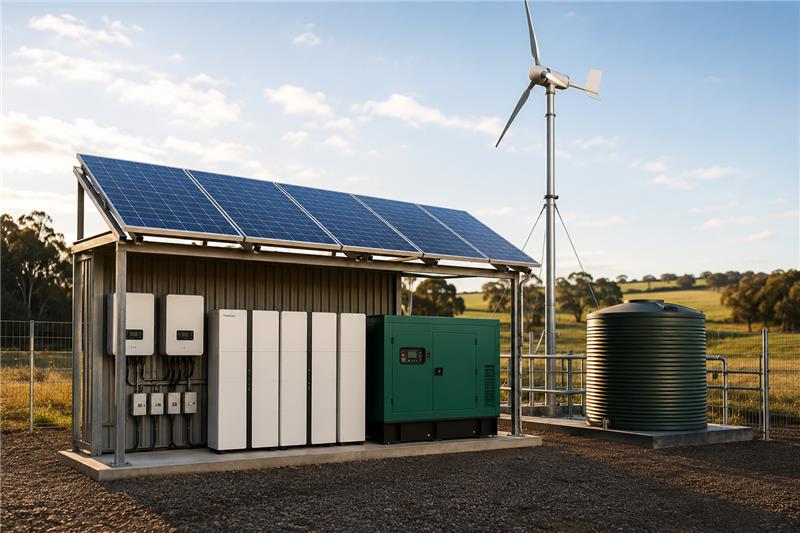
A factory-integrated system combining solar, optional wind, battery storage, and a variable-speed generator—delivering far better efficiency than traditional diesel setups.
Best for:
Farms, stations, agribusiness, telecom towers, irrigation, treatment plants
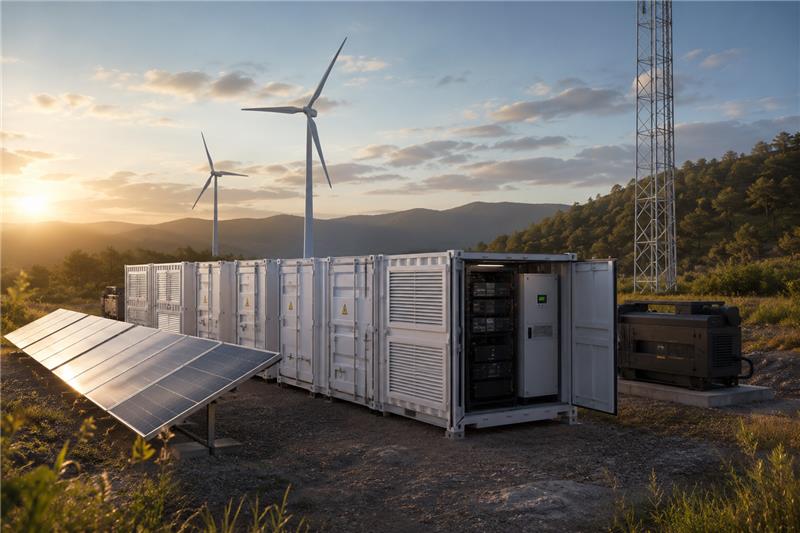
Containerised, portable microgrid system (15kW to 150kW per container); multi-container designs available. Multi-source generation; multi-day battery autonomy; remote monitoring.
Best for:
Mining camps, resorts, remote communities, fringe-of-grid commercial sites, international projects
Solar PV + lithium battery + small backup generator. The straightforward off-grid solution for homes and small commercial sites.
Best for:
Remote homes, lifestyle blocks, holiday properties, small workshops, weekenders
A factory-integrated system combining solar, optional wind, battery storage, and a variable-speed generator—delivering far better efficiency than traditional diesel setups.
Best for:
Farms, stations, agribusiness, telecom towers, irrigation, treatment plants
Containerised, portable microgrid system (15kW to 150kW per container); multi-container designs available. Multi-source generation; multi-day battery autonomy; remote monitoring.
Best for:
Mining camps, resorts, remote communities, fringe-of-grid commercial sites, international projects
STAND ALONE SOLAR + BATTERY
For most remote homes, the ideal setup is simple: a well-sized solar system, lithium batteries with multi-day backup, and a small generator used only when needed. We design based on your usage, use premium components, and plan for worst-case conditions—so the generator runs only a few times a year.

Workshops, sheds, micro-homes, studios, weekenders
5kW solar · 10-15kWh battery · small AC inverter · optional 3kVA generator

Holiday homes, small efficient homes
8kW solar · 20-30kWh battery · hybrid inverter · 5kVA generator

Standard 3-4 bedroom homes, small farms, small businesses
12-18kW solar · 40-60kWh battery · Selectronic inverter-charger · 8kVA generator

Large homes, community living, large farms
20-30kW solar · 80-120kWh battery · multi-phase Selectronic · 12-15kVA generator
Workshops, sheds, micro-homes, studios, weekenders
5kW solar · 10-15kWh battery · small AC inverter · optional 3kVA generator
Holiday homes, small efficient homes
8kW solar · 20-30kWh battery · hybrid inverter · 5kVA generator
Standard 3-4 bedroom homes, small farms, small businesses
12-18kW solar · 40-60kWh battery · Selectronic inverter-charger · 8kVA generator
Large homes, community living, large farms
20-30kW solar · 80-120kWh battery · multi-phase Selectronic · 12-15kVA generator
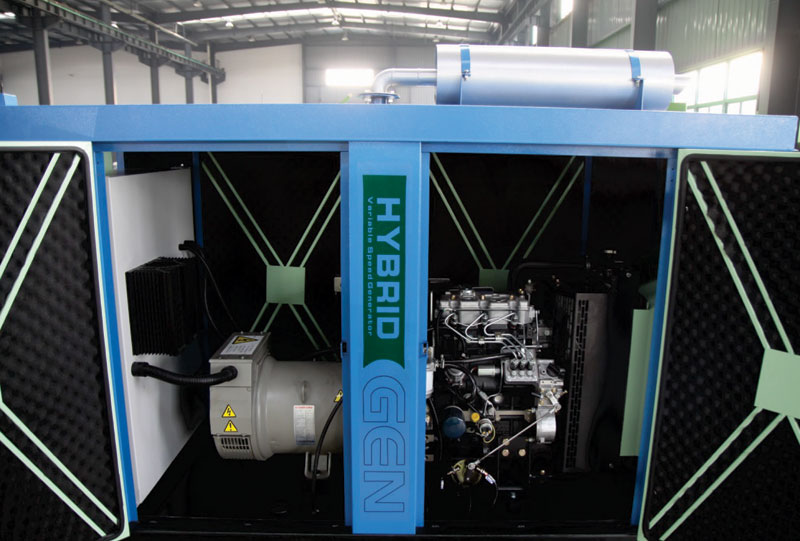
International patent: PCT/AU2011/001068

HybridGEN - Patented Hybrid
HybridGEN is Regen's own renewable hybrid power pack — a factory-wired cabinet that combines solar PV, optional small wind, lithium battery storage, and our patented variable-speed generator. It replaces a standard fixed-speed diesel generator with a system that runs the engine only when it's needed, only at its most efficient speed, and only after the renewables have done their job.
The result: 30–60% reduction in diesel consumption versus a conventional diesel system, longer engine life from running at optimum load, stable voltage and frequency across varying solar and wind input, and a system that ships in a fully wired enclosure — drop in, connect, and run.
Diesel generators are typically sized to peak demand. But for most remote sites, peak demand happens for a few hours a day — most of the time the engine is loafing at 20–40% of its rated capacity. At low load, three things go wrong: fuel efficiency drops sharply (more litres per kWh produced); incomplete combustion causes wet stacking and cylinder glazing (engine wears out faster); and voltage and frequency become unstable as renewable inputs vary. HybridGEN's variable-speed generator runs the engine at the speed that matches the current load — extending engine life, cutting fuel consumption by 30–60%, and stabilising power quality even when solar and wind inputs swing.

PCT/AU2011/001068 — Power Management System and method for optimising fuel consumption

Prof Chem Nayar, REGEN TECHNOLOGIES PTY LTD

Variable-speed diesel/gas generator (patent pending), runs at optimum speed for current load

Solar PV (any Tier-1 panel) and optional small wind generator

Lithium battery, sized to site load profile

Factory-wired cabinet, fully enclosed; weather-rated

Ideal for remote power, telecom, water treatment, irrigation, wastewater and cold storage.

Australia, India, Maldives, Indonesia, Vietnam, Sri Lanka, Singapore
SOLAR-WIND-DIESEL MICROGRID
For mining and exploration camps, resorts, remote communities, and fringe-of-grid commercial sites, a single hybrid pack isn't sufficient. A microgrid is. We design and supply fully containerised, portable, and fully operational microgrid systems from 15kW to 150kW per container — and multi-container designs scale to a megawatt or more. Our microgrids combine solar PV, optional wind generation, lithium battery storage, and a variable-speed diesel/gas generator running our patented control technology. They're built for the cyclones, dust storms, and extended wet-weather events typical of northern WA. They've been proven in remote islands of the Republic of Maldives, in Singapore, in resorts in Australia and Sri Lanka, in schools, and in medical centres.

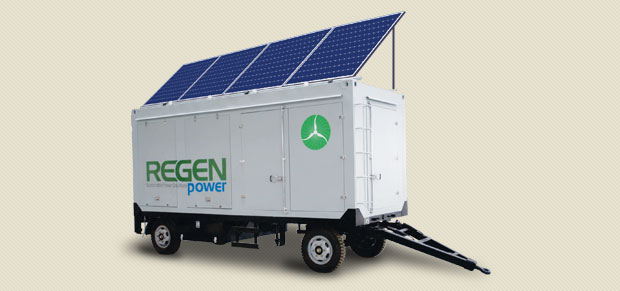
ACQUASMART
AcquaSmart is Regen’s portable water-treatment solution for remote sites, powered by the HybridGEN renewable hybrid pack. It combines reverse osmosis, UV and ozone sterilisation, with real-time monitoring—all in a trailer-mounted system that can be towed anywhere. Designed for remote communities and off-grid sites, it delivers WHO-standard drinking water reliably and cost-effectively.
Regen HybridGEN — solar PV, optional small wind, optional micro-hydro, variable-speed generator backup
Driving pump, source water tank, source water pump, quartz sand filter, activated carbon filter, softener, fine filter
Semi-permeable helix membrane; removes 96%+ dissolved solids, 99%+ organic matter, 99%+ colloidal matter, ~100% bacteria; stainless inlet/outlet pipes; flow rate up to 15m³/hr
An Off-Grid Story
Off-grid systems are bought on trust. The site is remote, the buyer can't always inspect the work, and a system failure 800km from Perth is expensive. Here's how we earn that trust — verifiable, documented, decades-long.
PCT/AU2011/001068 — power management system and method for optimising fuel consumption. Inventor: Prof Chem Nayar (Regen Technologies Pty Ltd). Filed in Australia, granted internationally.
Prof Chem Nayar — decades of renewable energy research and engineering. Academic background combined with hands-on industry deployment across remote sites.
PCT/AU2011/001068 — power management system and method for optimising fuel consumption. Inventor: Prof Chem Nayar (Regen Technologies Pty Ltd). Filed in Australia, granted internationally.
Regen Technologies combines academic rigor with field-proven engineering. Every off-grid system is backed by peer-reviewed research and decades of deployment data.
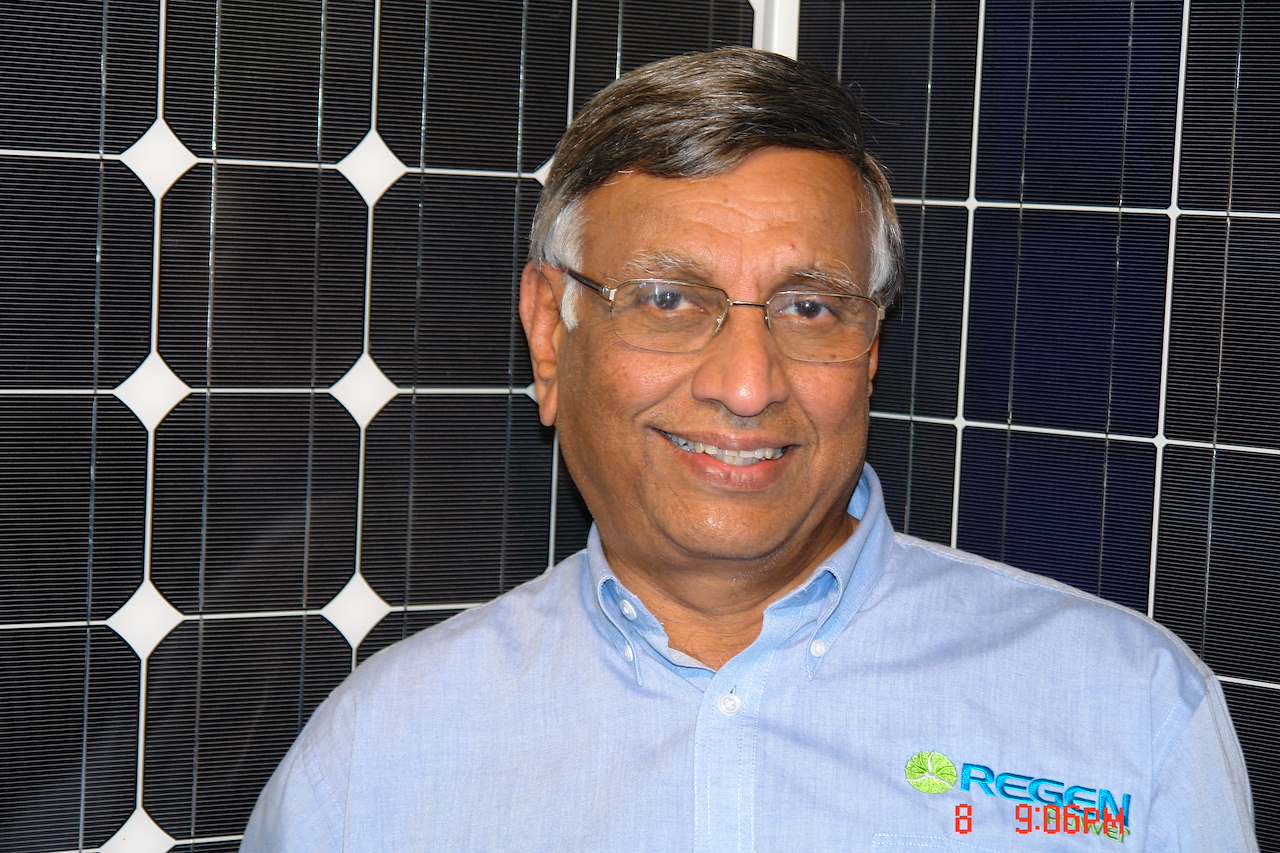
Founder & chief technology officer — pioneer in renewable energy systems and inventor of Regen's patented HybridGEN technology, driving decades of innovation in sustainable off-grid power.
Six Steps
Off-grid projects are engineering jobs more than installation jobs. We run a six-step process from first call to handover. The early steps are deliberately heavy: getting the site analysis and the load profile right is what makes the system reliable for the next 20 years.
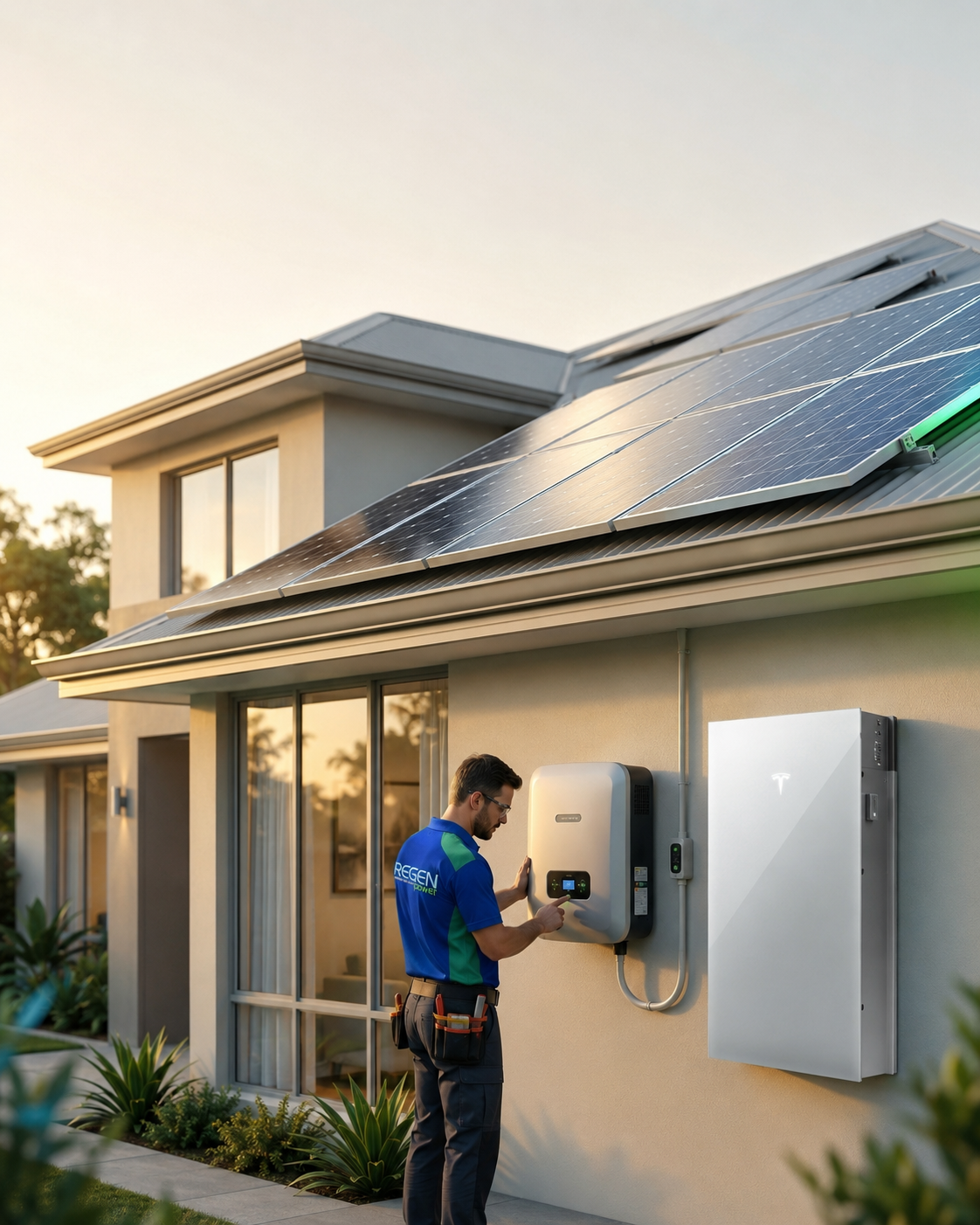
Often, yes. Western Power’s quoted cost to extend a line to a remote property is typically $30,000–$200,000 per kilometre. If your nearest line is more than a few kilometres away, an off-grid system is usually cheaper to install — and you have no power bills, no demand charges, and no exposure to grid outages thereafter.
Talk To Our Remote Area
Off-grid projects are engineering jobs. The first conversation is technical, not transactional — load profile, site context, generator history, growth plans, water needs if any. Once we understand the problem, we come back with a system that solves it. Send us a brief site overview using the form, or call our remote-area team direct on 1800 073 436.