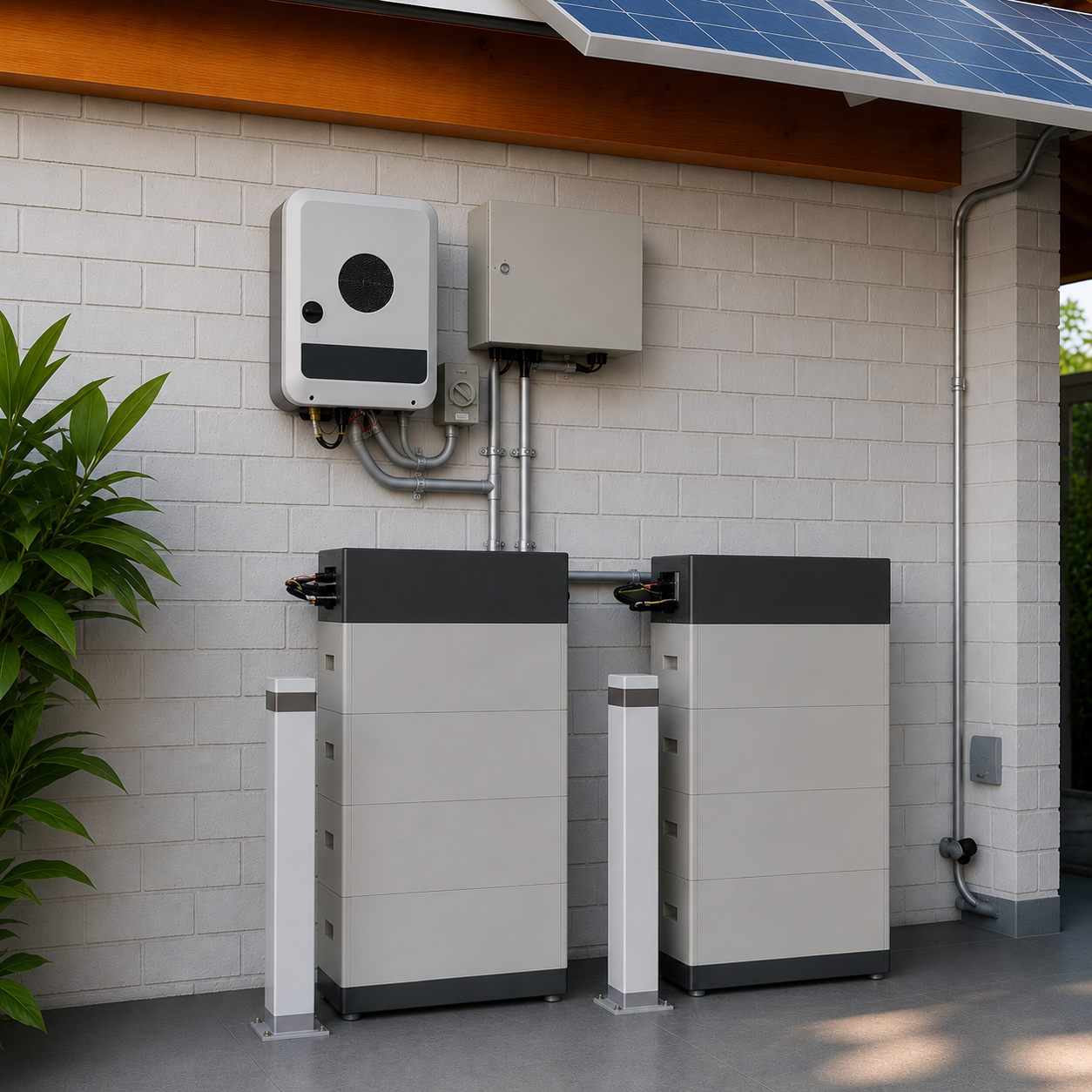
- a good, economical and long-lasting storage option for energy. The battery storage solutions provided for residential sectors are way too expensive to power a city. The need of the hour is an affordable alternative for storing solar energy when the sun shines and use it when it doesn’t.
- A higher efficiency power production is needed. The maximum efficiency of solar panels is 16- 20%. A higher efficiency power production will call for lesser number of solar panels, but with more efficient production. That would be a solution for large land requirement problems.
- More investment should be made for the R&D of these technologies. Govt and Companies need to push for renewable and sustainable energy forms.
ArticlesSolar System
Can we power a big city with solar 24/7?
Cities are responsible for 70% of energy-related CO2 emissions. To reduce future electricity demand and enable a net zero-carbon electricity system, renewable…
22 Feb 2022
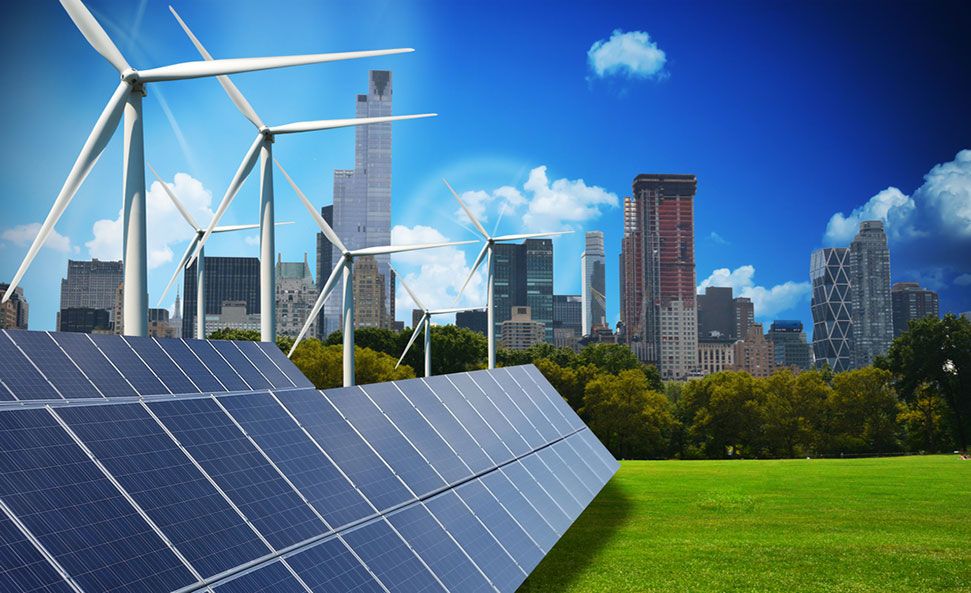
Cities are responsible for 70% of energy-related CO2 emissions. To reduce future electricity demand and enable a net zero-carbon electricity system, renewable energy solutions are an easy way out.
In the urge to achieve their clean energy and climate goals, many towns and cities around the world have decided to go for renewable energy procurement options.
Some of the towns of the UK and the USA have committed to switching to 100% clean energy by 2050.
Over 100 cities now get at least 70% of their electricity from renewable sources such as hydro, geothermal, solar and wind. People are shifting to solar energy due to its excellent sustainability advantage over fossil fuels.
If we can power a big city with solar 24/7, that would be a good option. But there are a lot of variables we need to consider before doing so.
Location of the city under consideration is very important. The energy produced by a solar power system is directly proportional to the solar insolation it receives. Solar irradiance depends on the location. Solar panels produce the maximum during peak sun hours.
The peak sun hours of one place would be entirely different from another place. We need to find out about the peak sun hours received by the prospective location to know which source of renewable energy would be the best to power that region.
The geographical location of the city, its latitude and longitude, closeness to equator matters a lot when it comes to powering a city with solar.
Weather condition of a city has a direct impact on energy production. Cloud, snow and rain can affect electricity generation. If the city has more winter months than summer, it would affect the generation.
Before planning to power a city with solar, it would be ideal to check whether the general weather conditions of that area would be suitable for solar power production.
If the idea is to power a city just for daytime, it is more feasible. The idea to power the city entirely with solar for 24 hours and seven days a week is a bit compelling. It will require a large number of panels and a sustainable storage solution too.
Every city is not the same. So is its consumption. Once the city of installation is decided, one need to find out its electricity consumption.
If we know the electricity consumption of the city, it can easily be converted to kWh per day. By calculating the number of panels required for 1 KWh, it is easy to find out the number of panels required to power the entire city.
For example, a city with an average power consumption of 11,000,000 kWh per day would require roughly 11 million solar panels. That much solar panels would require 19 square kilometres or 4,600 acres for installation.
Availability of large area for solar installation is another matter of concern when it comes to powering a big city 24/7.
It takes 32 acres of solar power panels to meet the demands of 1,000 homes, according to a new study from the National Renewable Energy Laboratory in Golden. Solar power system is definitely a feasible option for residential sector, but not that feasible to power a city.
A solar farm that produces an average of 500 MW of electricity is spread in 2000 hectares. While a 500 MW of electricity in thermal or nuclear plant can easily be produced in less than 2 Sq. km.
The biggest demerit of powering a city with solar is the availability of area. For a city like New York which uses 10.5K MW of electricity we need at least 420 Sq. km of area. It is almost impossible to find such a large area in the vicinity of a metropolitan region.
There are many challenges that come in the way while powering a big city with solar 24/7.
It is not feasible to power a big city with solar energy as sun is not available 24 hours and on 365 days. The present grid infrastructure needs to be strong.
Transmission losses during the process of converting DC to AC has to be taken care of.
To make use of solar energy to power cities we need