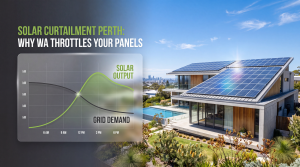

In recent years, rooftop solar systems have become more than just an alternative energy option—they’ve become a cornerstone of the global transition to clean, sustainable power. As the world grapples with climate change, energy security, and rising electricity costs, solar energy has emerged as a practical and powerful solution, with rooftop installations leading the way in decentralized energy generation.
The solar industry is undergoing rapid transformation, driven by continuous technological innovation. From more efficient photovoltaic (PV) cells and smarter inverters to advanced battery storage and AI-powered monitoring systems, each breakthrough is making solar power more accessible, reliable, and cost-effective than ever before. This evolving landscape not only empowers homeowners and businesses to reduce their carbon footprint but also plays a crucial role in shaping the future of energy.
In this blog, we explore the latest changes in solar technology and how these innovations are redefining what’s possible with rooftop solar systems.
What Are Perovskite Solar Cells?
Perovskite solar cells are a new class of photovoltaic technology named after the unique crystal structure they use—called perovskite. Unlike traditional silicon-based solar cells, perovskites are made from a family of materials that are cheap to produce, easy to process, and can be engineered at the molecular level for improved performance.
Perovskite solar cells have shown remarkable efficiency improvements in a short span of time. Lab-scale perovskite cells have already achieved power conversion efficiencies of over 25%, rivaling and even surpassing conventional silicon cells. What’s even more promising is their ability to be layered with silicon in “tandem” configurations, potentially pushing efficiencies beyond 30%, a milestone considered difficult with silicon alone.
Bifacial Solar Panels
Bifacial solar panels are an innovative type of photovoltaic module designed to capture sunlight from both their front and rear sides, significantly increasing total energy generation. While the front side functions like a conventional panel, the rear side absorbs reflected light from surfaces like concrete, sand, water, or even snow. This dual-sided design allows for greater energy output, especially when installed in open areas with high ground reflectivity or elevated mounting structures that allow more light to reach the back. Ideal use cases include commercial rooftops, solar farms, and canopies where maximizing energy efficiency and return on investment is key.
Transparent and Flexible Solar
Transparent and flexible solar technologies are pushing the boundaries of how and where solar energy can be harvested. See-through solar panels, also known as Building-Integrated Photovoltaics (BIPV), can be embedded into windows, facades, and glass surfaces, allowing buildings to generate electricity without compromising aesthetics or natural light.
Meanwhile, flexible solar panels—lightweight and bendable—open up possibilities for integration into a wide range of surfaces and products, from wearable solar clothing and portable chargers to curved structures and vehicle exteriors. These emerging technologies offer a seamless blend of design and function, expanding the reach of solar power into everyday life in ways previously unimaginable.
Advancements in Battery Technology and AI in Smart Energy Management
Recent advancements in battery technology and artificial intelligence (AI) are revolutionizing the way solar energy is stored, managed, and utilized. Modern lithium-ion and emerging solid-state batteries now offer higher energy densities, longer lifespans, and faster charging capabilities, making solar storage more efficient and reliable than ever. Coupled with AI-driven energy management systems, these technologies enable smart forecasting, real-time optimization, and automated control of energy usage.
This means homeowners and businesses can not only store excess solar energy for use during peak hours or outages but also maximize savings by intelligently balancing grid interactions, consumption patterns, and even electric vehicle charging—all contributing to a more resilient and cost-effective energy ecosystem.
Expanding Horizons: Novel Applications of Solar Tech
As solar technology evolves, its applications are expanding far beyond traditional rooftops and solar farms. Innovations are driving solar integration into unexpected and transformative areas—from solar-powered drones and agricultural greenhouses to desalination systems and remote off-grid installations. Solar skins can now be custom-designed to blend with rooftops or brand aesthetics, while solar roads and walkways are being tested to generate power from pedestrian and vehicular traffic. Even space-based solar power is gaining attention, with research exploring how satellites could beam solar energy back to Earth. These novel applications highlight the versatility of solar energy and its growing role in powering a wide array of industries, environments, and lifestyles.
What These Innovations Mean for Consumers and the Planet
The rapid advancements in solar technology—from high-efficiency perovskite and bifacial panels to transparent modules, flexible applications, smarter batteries, and AI-driven energy management—are transforming the solar landscape. These innovations are making solar energy more accessible, affordable, and efficient than ever before, empowering consumers to take control of their energy use while contributing to a cleaner, more sustainable future. As solar becomes increasingly adaptable to different needs and environments, it holds immense potential to reduce carbon footprints, lower electricity costs, and build energy resilience on both individual and global scales. Staying informed and open to adopting these emerging technologies is not just a smart choice—it’s a meaningful step toward a greener planet and a more energy-secure tomorrow.