
WA’s next wave of home batteries won’t just sit in the garage storing excess solar — they’re set to become active participants in the grid. Under updates led by Energy Policy WA, the May 2026 connection rules will reshape how distributed energy resources connect and operate across the South West Interconnected System (SWIS). Systems up to 30 kVA will be required to support smarter controls, including flexible exports, dynamic export limiting and CSIP-AUS compliant commissioning, enabling better DER integration at scale. The shift marks a clear move away from “set and forget” installations toward grid-smart batteries that can respond to network needs, support voltage stability and open the door to future VPP participation — effectively turning household batteries into mini grid assets that can both stabilise and monetise their performance.
What Changes on May 1, 2026
- Standardised technical pathway for systems up to 30 kVA: From May 1, 2026, new and upgraded solar and battery systems up to 30 kVA connecting to the South West Interconnected System (SWIS) will follow a clearer, standardised set of technical and communication requirements. Led by policy direction from Energy Policy WA, the changes aim to streamline DER integration while ensuring systems are capable of responding to network conditions in real time.
- Flexible exports and digital commissioning: The updated framework unlocks broader access to flexible exports where network capacity allows, reducing reliance on static export limiting. It also simplifies approvals and commissioning by shifting toward CSIP-AUS compliant digital communication between inverters, batteries and the network — paving the way for smarter control, faster processing and future-ready grid participation.
Why WA Is Doing This
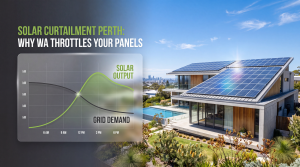
Western Australia already has one of the highest rates of rooftop solar penetration in the country, with small-scale systems supplying a significant share of daytime demand across the South West Interconnected System (SWIS). According to planning insights from Australian Energy Market Operator (AEMO), distributed rooftop PV now represents a major component of the state’s renewable generation mix — particularly during mild, sunny days when grid demand is low. However, unmanaged exports from thousands of small systems can create voltage instability, minimum demand challenges and operational complexity. The updated framework guided by Energy Policy WA is designed to integrate these small devices more intelligently, ensuring home batteries and inverters actively support network stability rather than strain it — helping DER work with the grid, not against it, as renewable penetration continues to rise.
What It Means for Early Adopters & Upgraders
- Flexible exports become the norm: In many areas of the South West Interconnected System (SWIS), flexible exports and dynamic export limiting will increasingly replace fixed export caps. Instead of being permanently restricted to a low ceiling, eligible systems can export more when local network capacity allows — but will also be automatically adjusted during constrained periods.
- VPP-ready systems are the smarter investment: Choosing hardware and firmware that support digital communication and future Virtual Power Plant (VPP) participation will become increasingly important. Under the framework shaped by Energy Policy WA, batteries that can respond to grid signals won’t just store solar — they can participate in coordinated events, potentially earning credits on top of standard bill savings.
- A clearer pathway for larger systems (up to 30 kVA): For households installing bigger single- or three-phase systems within the 30 kVA threshold, the updated connection rules provide more certainty around approvals, commissioning and compliance. That clarity reduces upgrade friction and makes it easier to design future-ready systems that align with WA’s evolving DER integration standards.
Your 2026 Spec List (What to Ask Your Installer)
For a future-ready system under the May 2026 framework shaped by Energy Policy WA, confirm your installer specifies a CSIP-AUS-capable inverter or gateway, reliable internet communications, configurable export-limit and flexible export settings, and clear VPP compatibility. Just as importantly, ensure commissioning and reporting align with the updated requirements for systems connecting to the South West Interconnected System (SWIS), and request links to both consumer and installer guidance so you understand how your system will operate under the new rules.
The Bigger Picture: From Private Device to Public Value
As these rules roll out, coordinated home systems — batteries paired with EV chargers — can help manage evening peaks, stabilise voltage and even contribute to contingency support across the South West Interconnected System. Supported by forward planning from Western Power, this shift turns private energy devices into shared grid assets, strengthening resilience across WA.
In 2026, the smartest battery systems won’t just chase kilowatt-hours — they’ll be designed for flexibility, communication and participation in a smarter grid shaped by Energy Policy WA.
CTA: Book a Grid-Smart System Design Session with Regen. We’ll design a CSIP-AUS-ready setup for your home, model potential flexible-export earnings, and prepare your system for upcoming VPP opportunities in your area.